


Japanese knotweed is well-known as an invasive weed; however, this plant has strong medicinal properties.
This article will dive into the health benefits of Japanese knotweed, its safety, and its traditional uses.
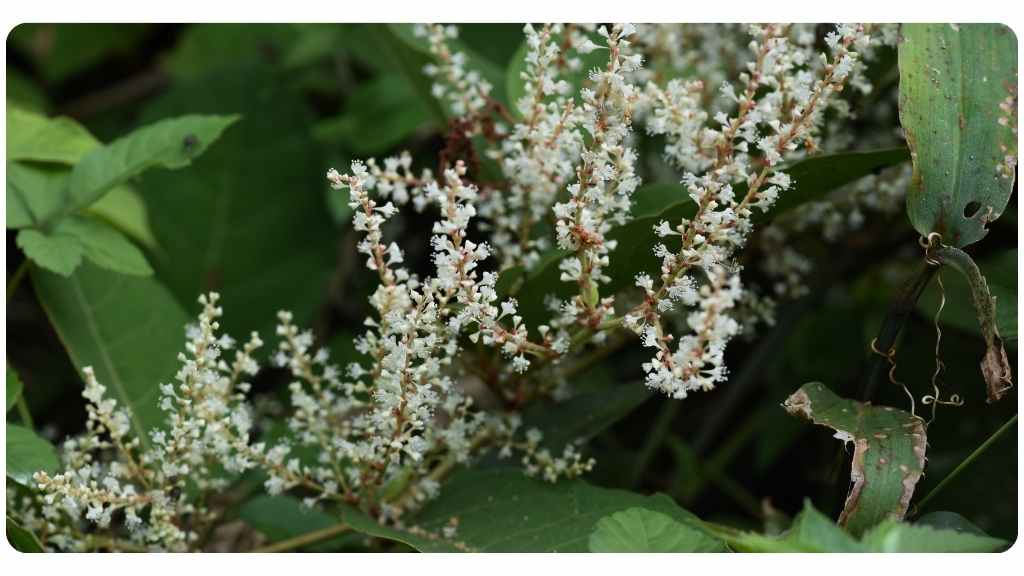
Table of Contents
What is Japanese Knotweed?
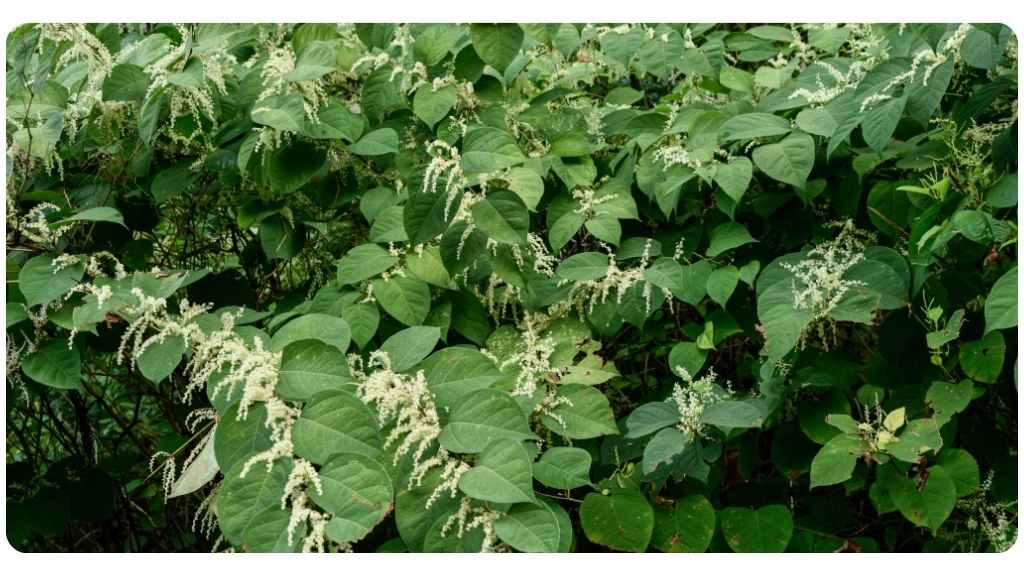
Japanese knotweed is a perennial plant that is considered an invasive weed. It’s native to Japan, North China, Taiwan, and Korea.
The Latin name for this herb is Polygonum cuspidatum.
Other common names for Japanese knotweed include bushy knotweed, Mexican bamboo, Chinese knotweed, Hu Zhang, Kojo, Itadori, and Hojang.
Japanese knotweed is commonly used in Traditional Chinese Medicine (TCM) for treating various conditions and in western herbalism for treating Lyme disease.
There are over 60 known plant compounds in Japanese knotweed, some including:
- Resveratrol
- Emodin
- Catechin
- Gallic acid
- Quercetin
- Rutin
Health Benefits of Japanese Knotweed:
Below are the top research-backed health benefits of Japanese knotweed and its active compounds.
1. May Treat Lyme Disease
Borrelia burgdorfer is a bacteria transmitted by ticks that cause Lyme disease. Lyme disease is the most common vector-borne disease in the United States.
One of the first signs of Lyme disease includes erythema migrans (EM), a “bullseye” rash that appears at the tick bite site. The rash may accompany flu-like symptoms such as fever, headache, stiff neck, fatigue, discomfort, muscle aches, or joint stiffness; however, one may also be asymptomatic. A typical late Lyme disease sign is arthritis and joint swelling, primarily affecting large joints such as the knees.
Researchers have studied numerous botanicals, including Japanese knotweed, to help treat individuals with Lyme disease.
An in vitro study evaluated several botanicals, including Polygonum cuspidatum (Japanese knotweed), Cryptolepis sanguinolenta, Juglans nigra (Black walnut), Artemisia annua (Sweet wormwood), Uncaria tomentosa (Cat’s claw), Cistus incanus, and Scutellaria baicalensis (Chinese skullcap) on their effectiveness against Borrelia burgdorferi. It was shown that Japanese knotweed has a strong ability to halt the growth of Borrelia burgdorferi.
Emodin is one of the Japanese knotweed’s active chemical compounds. A study examined specific chemical compounds on the activity against Borrelia burgdorferi and found that emodin effectively ceases the bacteria’s growth.
Babesia duncani is a parasite that causes babesiosis, an illness similar to malaria that may be transmitted by a tick. Babesia duncani may co-mingle with Borrelia burgdorferi, thus causing Lyme disease co-infections.
An in vitro study tested several botanicals, including Japanese knotweed, against the Babesia duncani. Japanese knotweed was shown to be able to stop the growth of this bacteria.
Lyme disease expert and author Stephen Buhner states that Japanese knotweed also helps to improve blood flow throughout the body. Thus, it is effective for the treatment of Lyme disease as the bacteria is often “hidden” in these areas of the body.</