

It’s estimated that 50% of men and 15% of women will face hair loss.
There are many herbs that have been traditionally used to treat hair loss and naturally promote healthy hair growth.
In this article, we’ll take a look at the best natural herbs for hair loss, based on both tradition and science.
Table of Contents
Hair Loss Overview:
Hair loss, known medically as alopecia, is a common disorder that affects 50% of men and 15% of women (especially postmenopausal women).
Losing hair is part of the typical aging process. The primary difference between male hair loss and female hair loss is the scalp pattern. Men typically lose hair in the front of their heads and on their temples. Males tend to retain hair in the posterior area of the scalp because this hair is resistant to the androgenic hormone.
Women tend to lose hair from the central area of the scalp. Female hair loss rarely leads to complete baldness, whereas male hair loss can end up with complete baldness.
Using herbs and natural remedies for hair loss can be a great way to support healthy hair growth and protect against hair loss.
Best Herbs for Hair Loss:
In this article, we’ve reviewed the most effective, research-backed herbs for hair loss.
1. Garlic & Onion
Garlic and onion are two of the most popular herbs for hair loss. In particular, it’s thought that they help to stop hair loss.
Both garlic and onion are considered together in this section since they both belong to the same genus and have many similarities in chemical composition. It’s thought that the chemical alliin is the active constituent in these plants.
A randomized double-blind clinical study involved applying 5% odorless garlic gel in combination with a corticosteroid betamethasone valerate to the scalp twice daily. The control group was given the same corticosteroid gel without the garlic. The gel was left on the scalp to act for 1 hour daily with the treatment regime lasting for 3 months.
At the end of the experiment, the total number of hairs in the experimental group was significantly higher than in the control group. This study thus suggested that local gel treatment with garlic can be effective as it provides long-lasting therapeutic benefits. The researchers also noted that it was well-received by patients.
In a comparative study, raw onion juice was topically applied to patients with spot baldness. In the control group, tap water was used instead of onion juice. The study participants were treated twice daily for 8 weeks. Hair regrowth was observed after 2 weeks of treatment with onion juice, and the number of hairs in the experimental group was significantly higher as compared to the control group.
Summary:
Human clinical studies show that alliin, an active constituent found in both garlic and onion, may be useful for stopping hair loss and promoting hair regrowth.
2. Green Tea
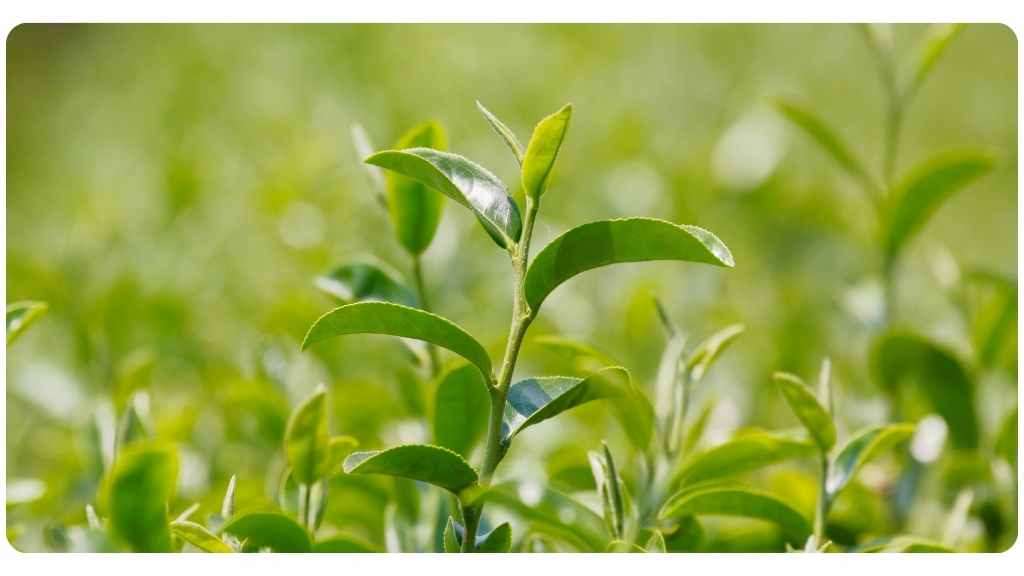
Green tea, known scientifically as Camellia sinensis, is a popular plant that originates from China. It’s thought that green tea is a beneficial herb for hair loss.
Green tea leaf contains a variety of flavonoids called catechins which are thought to provide many of the benefits of green tea (specifically antioxidant benefits). Epigallocatechin gallate (EGCG) is the primary catechin that is typically isolated from green tea.
It’s been reported that green tea has the ability to stimulate normal cell growth in epidermal keratinocytes, an important factor for hair regrowth.
Another study showed that the polyphenols in green tea have the ability to stop 5-alpha-reductase activity. 5-alpha-reductase (5-AR) is an enzyme that converts testosterone into dihydrotestosterone. High levels of 5-AR lead to hair loss.
A lab study sought to examine the use of epigallocatechin gallate (EGCG) isolated from green tea for the treatment of hair loss. In this study, a 10% EGCG mixture was used. The results showed that EGCG prolongs the anagen phase (i.e. growth phase of hair) and stimulates overall hair growth. The researchers noted that EGCG appears to support hair health by protecting dermal papillae.
Further, an animal trial found that the polyphenolic compounds in green tea helped to reduce hair loss in rodents. In this study, 60 female mice with spontaneous hair loss on the head, neck, and dorsal areas were given green tea extract over the course of 6 months. At the end of the study, 33% of the mice showed significant hair regrowth. No hair growth was observed among mice in the control group, which received regular water.
Summary:
Lab studies indicate that green tea may be beneficial for stimulating hair growth while decreasing hair loss. More human trials are needed for confirmation of these findings.
3. Pumpkin Seed Oil
The pumpkin is a popular plant that has been used as a food for thousands of years. Recent discoveries have shown that pumpkin seed oil is beneficial for hair health.
Pumpkin seeds are rich in a variety of nutrients, including fatty acids, beta-carotene, lutein, gamma and beta-tocopherols, squalene, and phytosterols.
Researchers have found that pumpkin seed oil has the ability to reduce 5α-reductase levels, which can help to support long-term hair health.
A double-blind, placebo-controlled study found that pumpkin seed oil can improve hair regrowth. The experiment