


Garlic is an herb that is well-known for its heart health benefits and antimicrobial properties. It has been used throughout history as food.
In traditional Chinese and Indian medicine, garlic was used for many health complaints, including indigestion, infectious diseases, and parasitic infestations.
Modern research shows that garlic and its active constituents may be beneficial for heart health, reducing inflammation, diabetic symptoms, and as a natural antibiotic.
In this article, we will look at the health benefits of garlic, its safety, and its history.
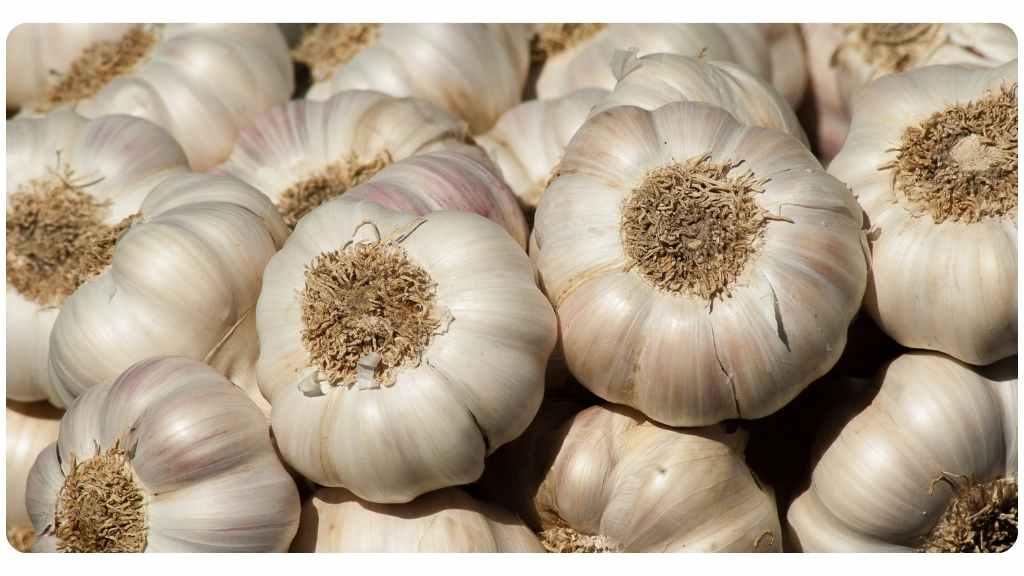
Table of Contents
What is Garlic?
Garlic is a perennial plant that belongs to the Amaryllidaceae family and is native to central Asia, although it is now found all over the world. Garlic’s Latin name is Allium sativum.
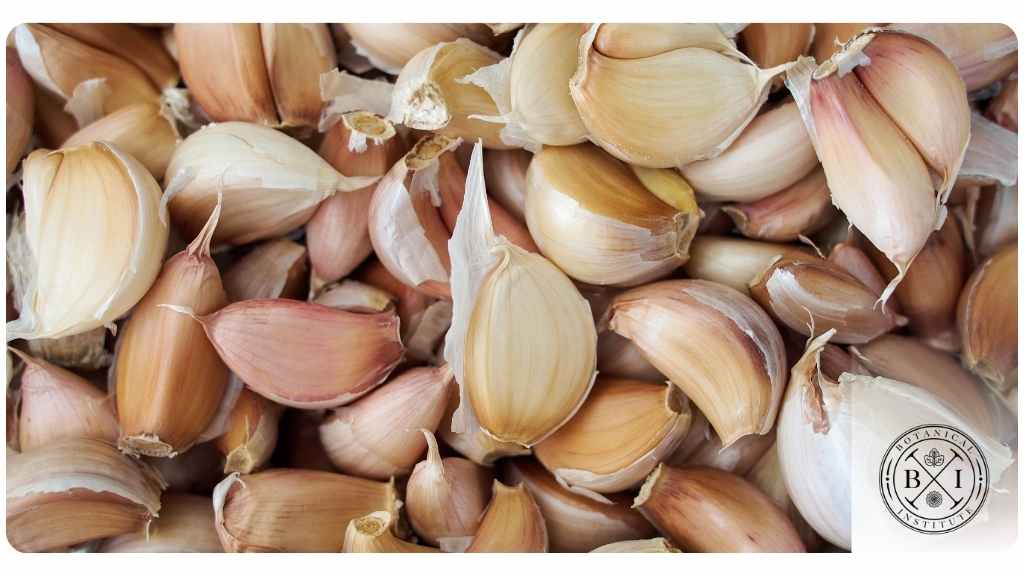
The most common part of the plant that is used is the bulb, however, the leaves carry culinary and medicinal value as well. The bulb grows underground and is made up of multiple cloves that provide the plant with nutrients.
Garlic cloves have an iconic, potent odor. It is warming and stimulating to the body and has been popular as a food and medicine for millennia.
Modern research supports the traditional claims that garlic has antioxidant, anti-inflammatory, and diabetes-supporting effects. Research also shows that garlic can help protect the liver.
Many of these various therapeutic benefits of garlic can be attributed to the array of phytochemical compounds present in the clove, including:
- Allicin
- Alliin
- Allyl propyl disulfide
- Ajoene
- Diallyl trisulfide
- S-allyl cysteine
- Vinyldithiins
Garlic also contains high levels of phosphorus, zinc, and potassium.
Presently, garlic is cultivated all over the world and is seen as comparable to some modern prescription drugs.
Health Benefits of Garlic:
Garlic is a well-researched herb with many human clinical trials backing it. Many of its traditional uses have been scientifically tested and show promising results.
Below are the top researched-backed garlic benefits for health.
1. Antimicrobial Properties
Evidence shows that garlic may have promising effects for treating fungal infections and fighting bacterial growth.
Infection occurs when bacteria, viruses, fungus, or other microbes infiltrate the body. During an infection, the immune system responds by attacking foreign invaders.
In a comparative trial involving children, garlic showed promise for preventing acute respiratory disease. The tablets were able to prevent infection at a higher rate than the common pharmaceutical drug, Benzimidazole.
A clinical trial involving 110 women found that garlic tablets (Garcin®) were similarly effective as a common pharmaceutical in treating Candida vaginitis. After 7 days of therapy, symptoms improved by 60% in the Garcin® group and 73% in the pharmaceutical group.
Researchers discovered that garlic has a promising effect on chronic oral candidiasis (i.e. mouth infections) in comparison to common drugs. Participants saw significant recoveries in both the garlic and drug group, however, subjects mentioned greater satisfaction when given the garlic therapy.
In a 2017 study, a mouthwash blend of garlic, green tea (Camellia sinensis), and lime was shown to significantly reduce oral bacterial load in children. This mouthwash combination was found to be as effective as a sodium fluoride mouth rinse.
An isolated constituent of garlic,