


Lyme disease is a common condition and there are numerous herbs to help treat individuals suffering from Lyme disease.
In this article, we will answer some common questions regarding Lyme disease and review the best herbs for Lyme disease.
Table of Contents
- Lyme Disease Overview:
- Best Herbs for Lyme Disease:
- Lyme Disease Herbal Protocol
- What Is Lyme Disease?
- What are the 3 Stages of Lyme Disease?
- How To Test for Lyme Disease?
- How Long Does Lyme Disease Last?
- What Types of Ticks Carry Lyme Disease?
- Is Lyme Disease Contagious?
- Lyme Disease During Pregnancy & Breastfeeding:
- What Does Lyme Disease Look Like?
- Common Treatment for Lyme Disease:
- Conclusion:
Lyme Disease Overview:
In the United States, Lyme disease (or Lyme borreliosis) is the most common vector-borne disease with an estimated 30,000 reported cases annually.
Lyme disease is caused by the bacterium Borrelia burgdorfer, which is transmitted by black-legged ticks.
To transmit the Lyme disease bacteria, ticks need to be attached to their host for 36-48 hours. Ticks can attach to any part of the body, but can commonly be found in areas such as the groin, thighs, armpits, and scalp.
It is important to remember that the tick must be infected in order to transmit Borrelia burgdorfer and cause Lyme disease.
Lyme disease infection is most common through nymphs and adult tick bites, although the infection can be transmitted through the larvae stage as well. Nymphs are tiny and more difficult to see than adults.
Spring, summer, and fall are the most common periods for tick bites.
Lyme disease can cause a vast range of symptoms:
- Skin rash
- Chills and fever
- Fatigue
- Headache
- Muscle and joint pain
- Neurological features
- Cardiovascular symptoms
Early diagnosis and proper treatment are essential to help prevent the development of the late stages of Lyme disease and severe symptoms.
Best Herbs for Lyme Disease:
Below are the best herbs for Lyme disease and its co-infections supported by scientific research.
Herbalists and practitioners who specialize in Lyme disease will often have a specific herbal protocol that uses a variety of the herbs below.
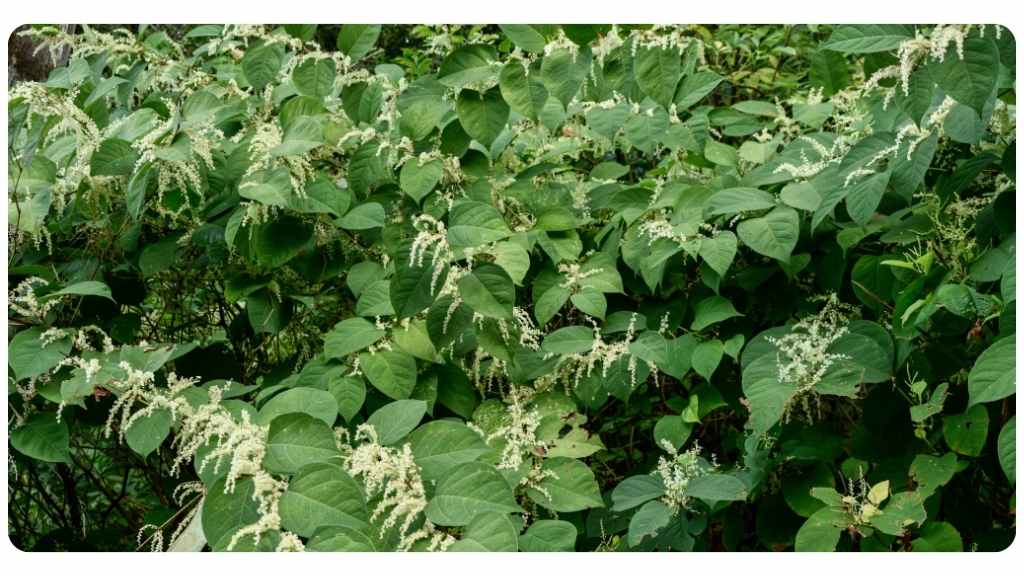
1. Japanese Knotweed
Japanese knotweed (Polygonum cuspidatum) is a medicinal plant, commonly known as an invasive weed, and is native to Asian countries.
A study demonstrated that one of Japanese knotweed’s main compounds, emodin, can effectively stop the growth of the bacteria that causes Lyme disease.
Another similar study showed that Japanese knotweed has a strong impact on inhibiting the growth of the Lyme disease bacteria.
The disease Babesiosis is a common co-infection of Lyme disease. A study revealed that Japanese knotweed can stop the growth of the parasite that causes Babesiosis as well.
Lyme disease expert and herbal author, Stephen Harrod Buhner notes why Japanese knotweed is an effective treatment for Lyme disease through its ability to:
- Improves blood flow
- Reduces inflammation
- Protects heart function
- Provides anti-bacterial and anti-viral effects
- Provides neuroprotective and regeneration effects
Summary:
Clinical studies and traditional herbalism have found that the antibacterial and anti-inflammatory effects of Japanese knotweed may work to prevent the growth of the Lyme disease bacteria.