


Feverfew is a small, daisy-like herb that grows abundantly across gardens in Europe, Australia, North Africa, China, and the Americas.
Feverfew has been traditionally used to reduce fevers and chills, support digestion, and improve mood. It’s also said to be helpful for migraine headaches.
This article will look at the health benefits feverfew, as well as its safety and history.
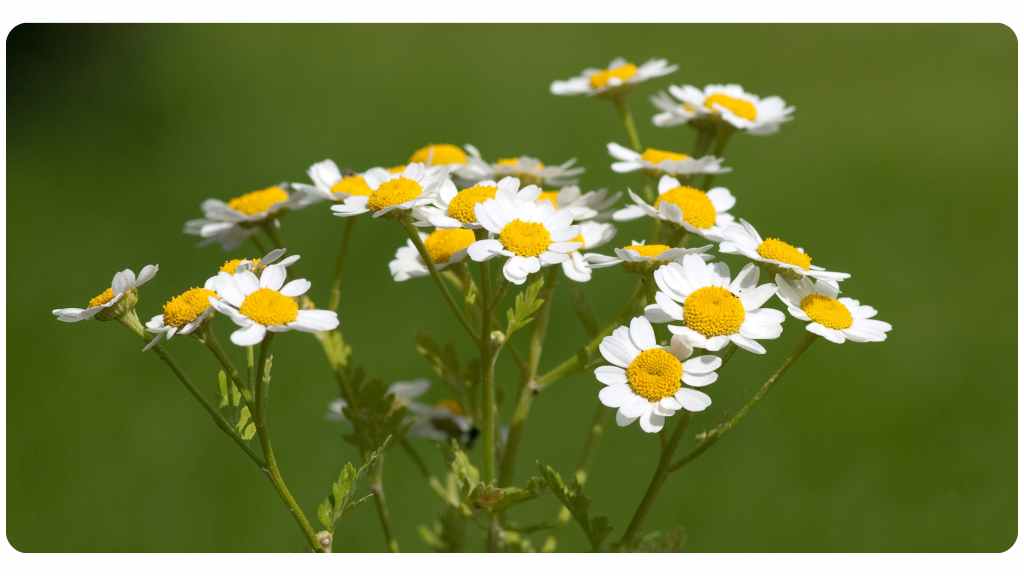
Table of Contents
What is Feverfew?
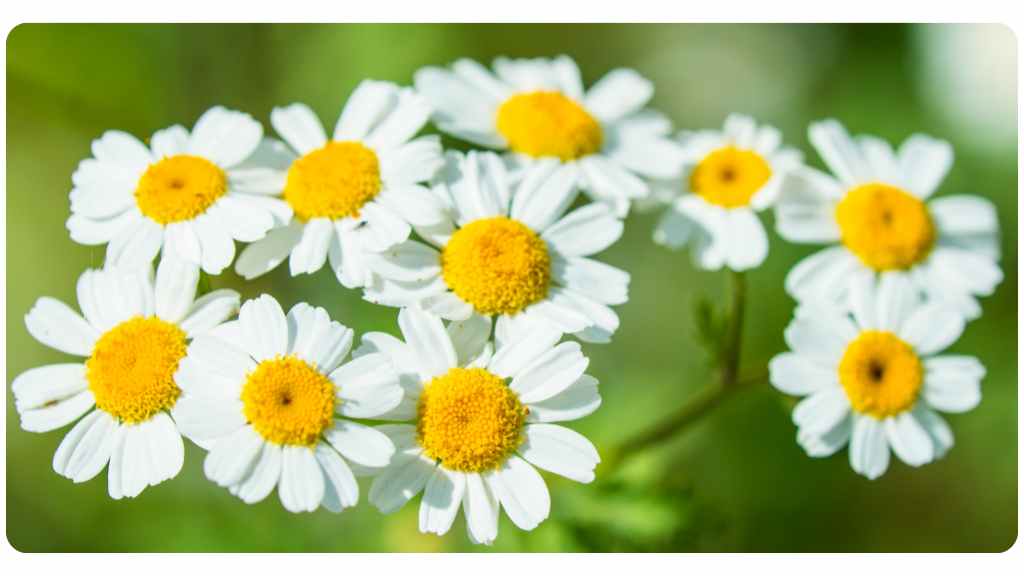
Feverfew is a small flower known for its likeness to chamomile (Matricaria recutita).
The scientific name for feverfew is Tanacetum parthenium. It grows throughout Europe and the United States, and although it grows in the wild, it’s primarily cultivated in gardens.
Traditional accounts recommend taking feverfew for fevers, chills, migraines, and digestive issues. Ancient Greco-Romans used feverfew for various conditions, including menstrual cramps and toothaches, and as a general tonic.
Contemporary research indicates that feverfew has anti-migraine and anti-inflammation properties. Studies also show its potential for alleviating gastrointestinal conditions.
The sesquiterpene lactones in feverfew, particularly a compound called parthenolide, are thought to be responsible for these health-supporting properties.
Health Benefits of Feverfew:
A combination of clinical research, traditional knowledge, and contemporary herbalist accounts have observed various feverfew benefits.
Below are the primary health benefits of feverfew and its main constituents.
1. May Have Anti-Migraine Effects
Various sources indicates that feverfew is a helpful herb for migraines.
Migraines are a complex disorder that involve moderate-to-severe headaches. Nausea and light/sound sensitivity often accompany these headaches, which can happen for hours or days.
In a clinical trial involving participants suffering from migraine headaches, feverfew was found to reduce the frequency and severity of the migraines over 6 months. Researchers suggest that the sesquiterpene lactones found in feverfew may be responsible for this effect.
Another clinical study with volunteers experiencing consistent migraines found that feverfew leaf capsules reduced the severity and frequency of migraines. The trial lasted 8 months, and there were no reported severe side effects.
In a pediatric clinical trial observing children with headaches, researchers discovered that a herbal combination formula (including feverfew and andrographis) “improved headache frequency and pain intensity.” The results continued for 16 weeks after the trial concluded.
A review of trials observing the effects of feverfew on patients with migraines found that feverfew supplements reduced the frequency of migraine headaches by 0.6 attacks per month. The review mentions that there were no adverse reactions to the herb.
A review of feverfew mentions that parthenolide is the main active constituent responsible for reducing the frequency of migraines.
The American Botanical Council recommends feverfew for “relief of migraine symptoms” due to various conclusive clinical studies.
The European Medicines Agency suggests taking feverfew “for the prevention of migraine[s], after serious conditions have been excluded by a doctor.” They recommend it for adults only and mention it “usually need[s] to be taken for 2 months to have an effect.”
Internationally renowned AHG herbalist, Christopher Hobbs, writes that feverfew generally prevents migraine headaches.
Accredited herbalist, Rosemary Gladstar, mentions that migraine sufferers have great success with feverfew, but it isn’t a “quick fix” herb. She recommends it as a preventative herb and says, “it generally has to be used for an extended period of time to be effective.”