


Chickweed is a common weed that has a variety of health benefits.
The herb was traditionally used to help heal skin irritations and wounds. It has also been used to help with stiff and painful joints.
This article will look at the health benefits of chickweed, its safety, and its history.
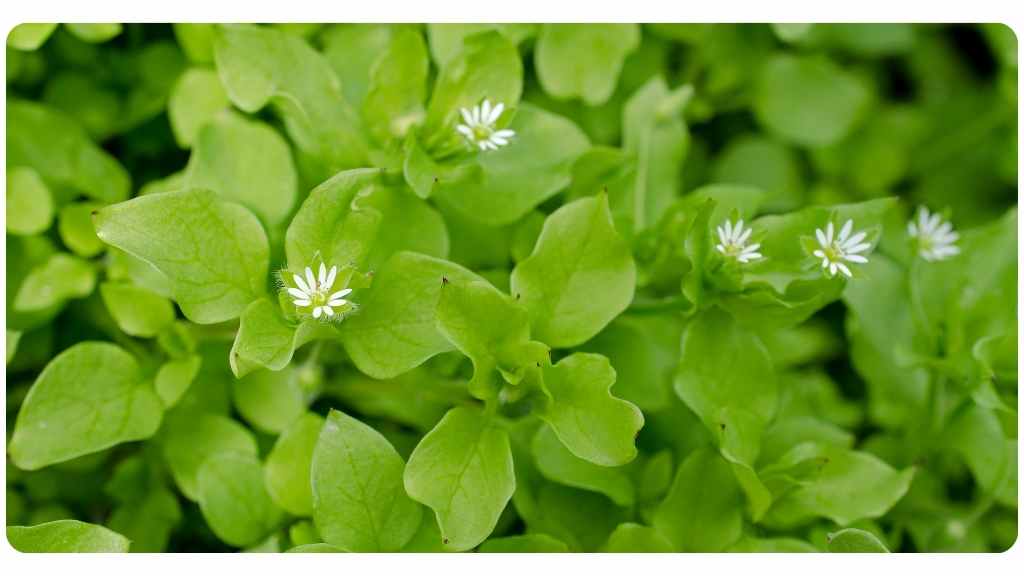
Table of Contents
What is Chickweed?
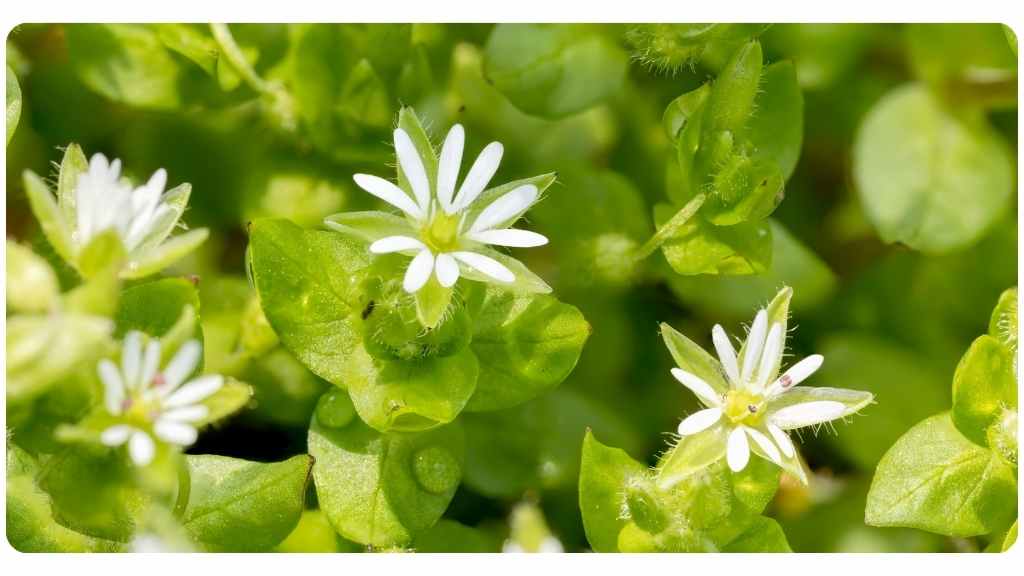
Chickweed is a hardy plant that is known for its ability to readily self-seed.
The scientific name for chickweed is Stellaria media. It can be found growing throughout the northern hemisphere and has traditional roots in European, African, Asian, and North American medicinal systems.
Traditional accounts suggest chickweed for ulcers and hoarse coughs. It has also been used as a food source. Similar to dandelion leaves, chickweed makes a great addition to salads.
Modern research indicates that chickweed benefits weight management and wound healing. It has also been shown to have antimicrobial effects.
Chickweed’s active constituents, including terpenoids, saponins, flavonoids, fatty acids, and vitamin C, are potentially responsible for some of these health-supporting properties.
Health Benefits of Chickweed:
A combination of clinical research, traditional knowledge, and contemporary herbalists have observed a variety of chickweed benefits. Below are the primary health benefits of chickweed and its main constituents.
1. May Help With Weight Loss
Chickweed shows promising health benefits for managing obesity and encouraging weight loss.
Maintaining a healthy weight is fundamental for optimal health and longevity. Excess body weight and obesity significantly increase the risk of numerous diseases and clinical disorders, including heart diseases, type 2 diabetes mellitus, hypertension, and others.
An animal study observing mice with a high-fat diet discovered that chickweedjuice suppressed weight gain. It also reduced triglyceride (fat) and LDL cholesterol levels, providing an anti-obesity effect.
Another animal study found that a chickweed extract reduced cholesterol levels and the size of fat cells in obese mice. Researchers attributed these effects to the extract’s ability to regulate fat metabolism.
Researchers also discovered that chickweed had an anti-obesity effect on mice through the suppression of appetite and increased heat in the body. The researchers attribute these effects to the saponin and flavonoid content in chickweed.
In the herbal text, A Modern Herbal, revered herbalist Maude Grieve writes that chickweed water is “an old wives remedy for obesity.”
Summary:
Animal studies indicate that chickweed may work to manage weight and may help to support weight loss. Human trials are needed to confirm these findings.
2. May Have Antimicrobial Benefits
Traditional evidence and lab research suggest that chickweed has antimicrobial properties.
Infection occurs when viruses, bacteria, fungi, or other microbes infiltrate the body and attack it. Antimicrobial herbs may help fight off invading microbes by supporting the immune response or by directly inhibiting the invaders.
A lab-based study discovered that chickweed has an anti-viral effect on a hepatitis-B virus (HBV). Researchers noted that the extract achieved this effect by reducing HBV DNA levels.
In a lab-based