


Red clover is a medicinal plant that has been used for thousands of years to treat various ailments.
In this article, we will look at red clover’s health benefits, safety, and dosage.
Table of Contents
What is Red Clover?
Red clover is a perennial herb, often seen as a flowering weed, growing wild in fields or on the side of the road. It is native to Europe, Asia, and Africa.
The plant’s Latin name is Trifolium pratense, while its common names include red clover, cow clover, meadow clover, and wild clover.
According to herbalist David Hoffman, some of the major bioactive compounds found in red clover include:
- Isoflavones such as formononetin, biochanin A, daidzein, genistein, formononetin, pratensein, trifoside
- Flavonoids such as pectolinarin, kaempferol
- Volatile oil
- Clovamides
- Coumarins
- Minerals and vitamins such as calcium, magnesium, potassium, vitamin C
- Phytoalexins
Red clover is commonly used in women’s health and for conditions such as menopause, osteoporosis, and cardiovascular disease.
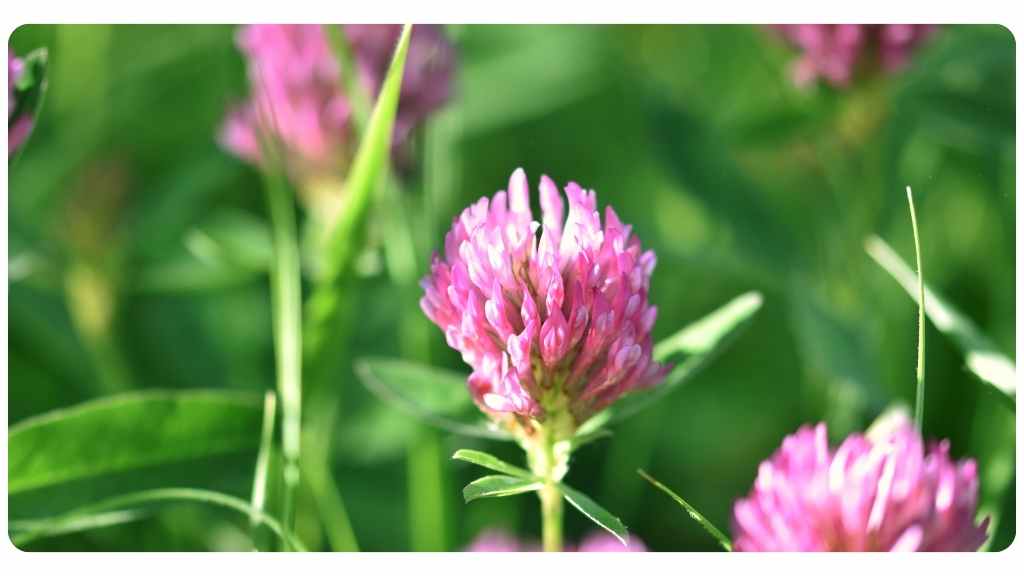
Health Benefits of Red Clover:
Below are the top research-backed health benefits of red clover and its constituents:
1. May Help with Menopausal Symptoms
As women age, the hormone estrogen declines and menopausal symptoms may arise. Some common menopause symptoms include:
- hot flashes
- disruptive sleep
- anxiety
- depression
- heart palpitations
- headaches
- vaginal dryness
- low libido
- weight gain
Hot flashes are the most common menopausal symptom, with more than 80% of menopausal women experiencing them.
Red clover contains isoflavones, these compounds have estrogenic effects on the body, binding to estrogen receptors to produce estrogen-like effects. Researchers believe this makes red clover, and other similar herbs for menopause such as vitex, raspberry leaf, and fenugreek, an effective treatment for menopausal symptoms.
The effects of red clover on menopausal symptoms were examined in a clinical study using Promensil, a dietary supplement of standardized red clover extract. Participants were given 80 mg of Promensil per day. By the end of the 16-week study, participants had a significant decrease in hot flashes by 44%.
Another 16-week clinical study demonstrated that Promensil can help significantly reduce the frequency of hot flashes by 48.5% and the severity of hot flashes by 47% in menopausal women.
A systematic review of ten clinical studies showed that red clover can decrease the frequency of hot flashes, and improve other menopausal symptoms, such as heart palpitations, vaginal dryness, depression, and anxiety.
In a study of 109 post-menopausal women, red clover isoflavone supplementation reduced anxiety and depression levels. These findings suggest that the plant’s phytoestrogens have a positive effect on brain function and mood.
A similar study reported improvements in libido, mood, sleep, scalp hair (better texture and less fragility), and skin (better texture, more moisture).
Summary:
Clinical research has found that red clover may work to relieve menopausal symptoms. Red clover was found to be especially effective in reducing the frequency and severity of menopausal hot flashes.
2. May Improve Bone Health
The drop in estrogen levels in aging women may also result in bone loss. This puts post-menopausal women at risk for developing osteoporosis, which is low bone mineral density (BMD).
A 12-month study of 205 women looked at the effects of red clover-derived isoflavones on bone density. Results revealed that the isoflavones in red clover may decrease bone loss and have a protective effect on the lumbar (lower) spine.
In a three-month study, the daily consumption of red clover extract (5 ounces) showed a beneficial effect on bone health in menopausal women by reducing bone loss and improving bone mineral density status.
Rimostil, a dietary supplement of isoflavones derived from red clover, was used in a study of post-menopausal women to evaluate its effects on bone health. After a six-month treatment, findings showed a significant increase in bone density, resulting in stronger bones.
Women’s health expert and herbalist, Dr. Aviva Romm indicates that due to red clover’s phytoestrogen and isoflavone content, the herb may