


Eyebright is a herb that’s native to the heaths and dry meadows of Europe.
Eyebright flower parts were traditionally used to manage eye infections, alleviate cold symptoms, and reduce inflammation. It has also been used to help with allergy symptoms.
This article will look at the health benefits of eyebright, its safety, and history.
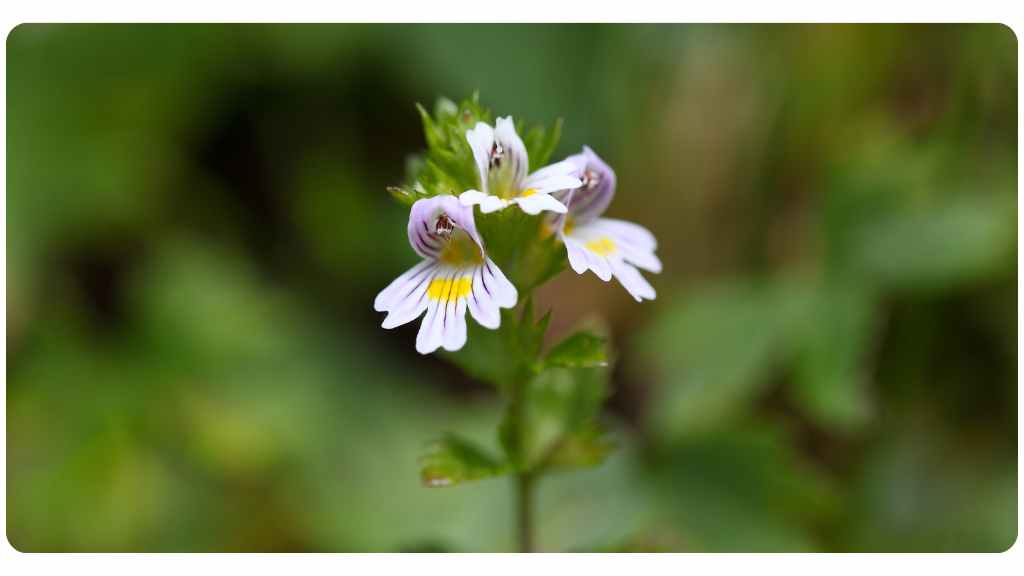
Table of Contents
What is Eyebright?
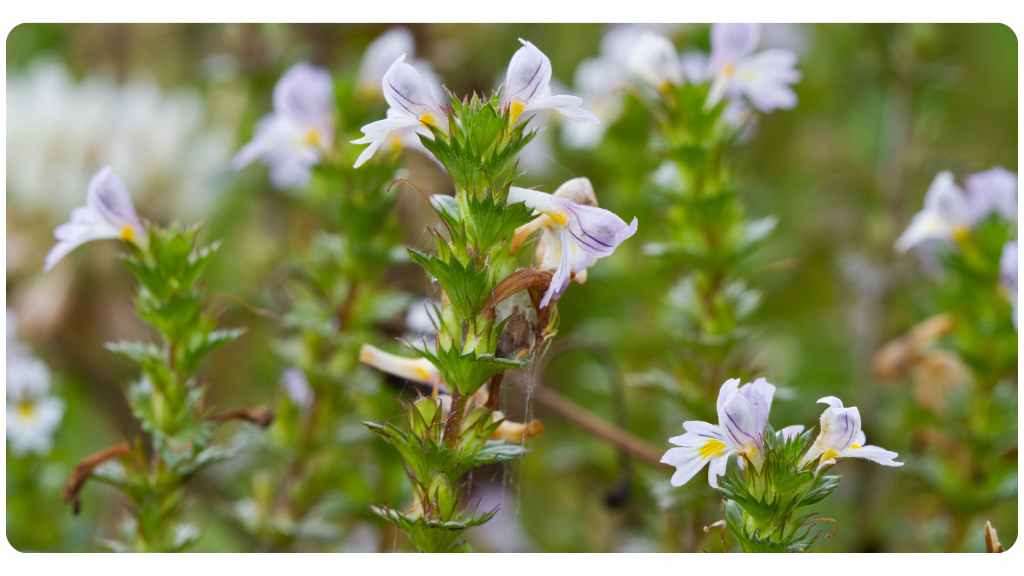
Eyebright is a small, flowering herb famous for helping with various eye conditions.
The scientific name for this herb is Euphrasia officinalis. It thrives in poor, chalky soil throughout Europe, North America, and Northern/Western Asia.
Traditional accounts recommend eyebright for conditions with eye and nose mucous discharge, congested coughs, and other upper and lower respiratory issues. In ancient various European cultures, eyebright was revered for its ability to improve poor eyesight.
Modern research suggests that this herb has antimicrobial and anti-inflammatory effects. Research also shows its ability to protect against oxidative stress with its antioxidant properties.
Some of eyebright’s main active constituents, like luteolin and quercetin, may be responsible for its various health benefits.
Health Benefits of Eyebright:
A combination of clinical research, traditional knowledge, and contemporary herbalists have observed various eyebright benefits. Below are the primary health benefits of eyebright and its main constituents.
1. May Support Eye Health
Various studies and traditional accounts suggest that eyebright supports the healing of some eye conditions.
The whole eye, including tissue and structures, can become infected by viruses and bacteria. Symptoms of an eye infection include redness, itching, irritation, mucous discharge, and excessive tearing. Eye infections are highly contagious and, if left untreated, can result in blurred vision or blindness.
In a randomized trial observing infants with eye discharge, Euphrasia eye drops® reduced the symptoms, like redness and tearing. Although the eyebright drops did not significantly improve treatment success, researchers noted that they could alleviate associated symptoms.
Another clinical study involving patients with eye conjunctivitis (pink eye) discovered that eyebright eye drops reduced symptoms and/or cured more than 85% of participants. The best results occurred when patients received 1 drop, 3x per day.
In a lab-based study observing human eye cells, researchers noted that eyebright extract shows promising therapeutic effects for eye disorders, like dry eye and ocular allergies. Eyebright appears to be able to do this by reducing inflammation.
A combination lab-based study involving eyebright and chamomile (Matricaria chamomilla) eye drops (Dacriovis™) observed that the eye drops protected eye cells from UVB radiation-induced cell death and improved healing conditions. The drops achieved these results by providing an anti-inflammatory and antioxidant effect on the eye cells.
The European Medicines Agency suggests taking eyebright for “symptomatic treatment and prevention of conjunctivitis…[and] minor ocular (eye) diseases.”
The American Botanical Council recommends this herb for “the treatment of conjunctivitis, sties, and other ailments of the eye.”
AHG Registered Herbalist, David Hoffmann, explains that Euphrasia officinalis is supportive of eye conditions like “acute or chronic inflammations, stinging and weeping eyes, and oversensitivity to light.”
World-renowned herbalist, Rosemary Gladstar, suggests well-strained eyebright tea “as an eyewash or compress for eye fatigue, conjunctivitis, sties, and other congestive conditions of the eye with profuse tearing.”
In A Modern Herbal, revered herbalist Maude Grieve