


Bladderwrack is a seaweed superfood that has many potential health benefits. As such, its usage is growing in popularity.
In this article, we’ll take a look at some of the active compounds and nutrients in bladderwrack. We’ll also go over bladderwrack’s health benefits, safety profile, and how to incorporate it into your diet.
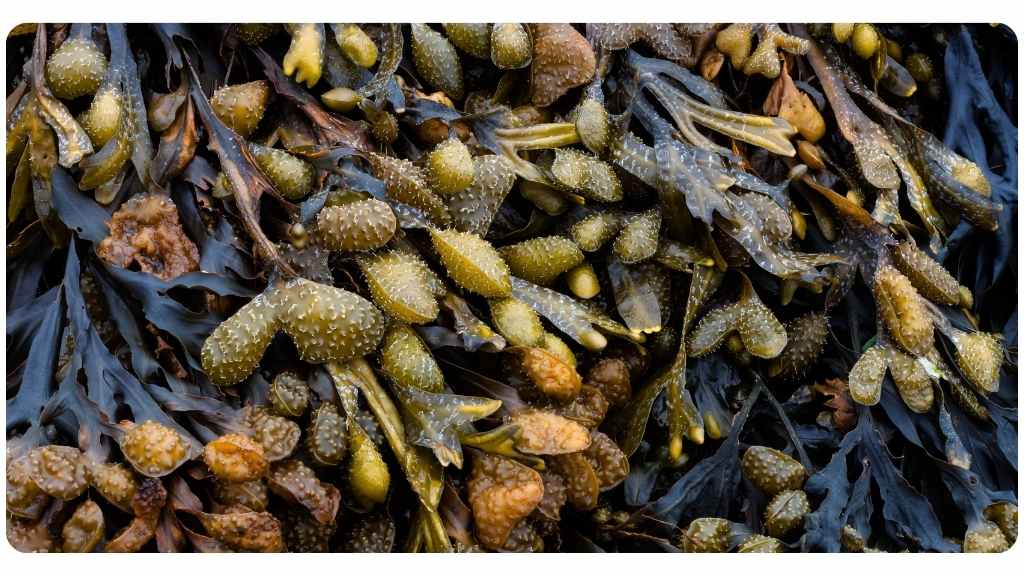
Table of Contents
What is Bladderwrack?
Bladderwrack, scientifically named Fucus vesiculosus, is a widespread type of brown seaweed found in many coastal regions. It grows throughout the western Baltic Sea, North Sea coastline, and the coastlines of the Atlantic and Pacific oceans.
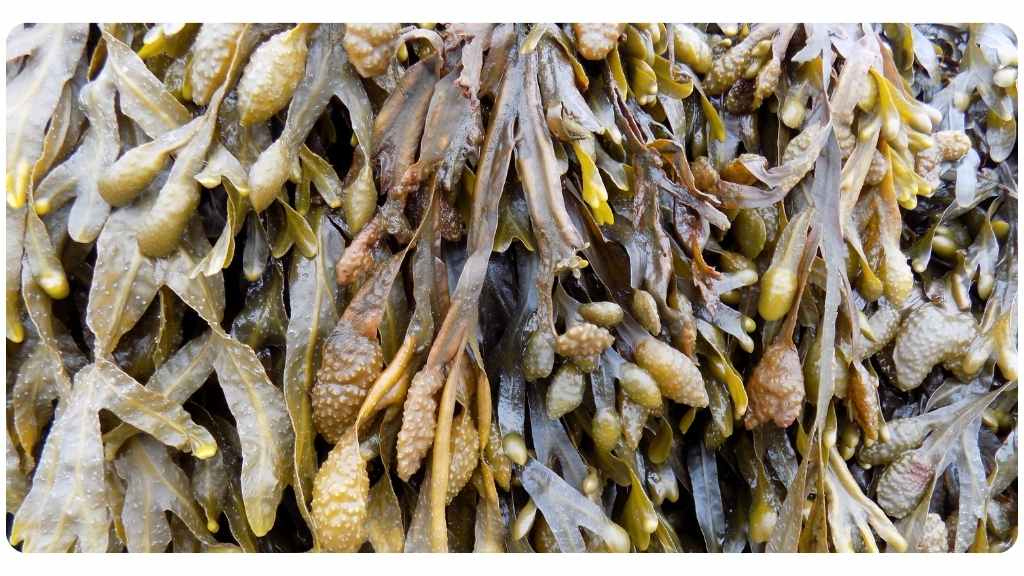
Its intriguing name comes from the air pockets in its leaves, which resemble little bladders and are evenly distributed throughout the plant.
Like other seaweeds, bladderwrack is rich in numerous nutrients, including polysaccharides, phenolics, fiber, terpenes, amino acids, proteins, and lipids.
Additionally, bladderwrack contains high amounts of many vitamins and minerals, including calcium, iodine, magnesium, potassium, zinc, vitamin A, and vitamin C.
It is also known for its high concentration of phytochemicals, which are thought to deliver many health benefits. Some of the main phytochemicals in bladderwrack include:
- Fucoidan
- Alginic Acid
- Laminarin
- Fucoxanthin
- Phlorotannin
Health Benefits of Bladderwrack:
As mentioned, bladderwrack is a nutritionally-loaded seaweed, so it comes as no surprise that there are many potential health benefits of bladderwrack. Specifically, bladderwrack and its various compounds may help to deliver the following benefits to human health.
1. May Help with Weight Loss
In this day and age, weight loss is a common goal, as many individuals struggle with being overweight. But fortunately, bladderwrack may have weight loss benefits and may help prevent or reduce obesity.
For example, in an animal study, rats who were given bladderwrack showed significantly lower weight gain compared to the control group. Moreover, the bladderwrack-fed rats also had better markers of liver and blood lipid health.
Another study in rats found that, even after giving them a high-calorie, high-fat diet, supplementing with bladderwrack prevented increases in body weight while also keeping triglyceride and cholesterol levels in normal ranges.
Importantly, the effects of bladderwrack on obesity have also been studied in humans. For example, in one study, overweight or obese subjects were given a supplement called Gdue, which is a combination of bladderwrack and rockweed (Ascophyllum nodosum). After 6 months, they found that supplementation led to significant reductions in waist circumference as well as other markers of metabolic syndrome, including insulin sensitivity.
Another clinical study was done on over 500 patients with metabolic syndrome. They found that supplementation with Gdue over 6 months led to an average weight loss of 7kg (around 15lbs), and a reduction in waist circumference on average of 7.5cm (about 3 in).
Summary:
Combination-treatment studies show that bladderwrack may be a useful herb for promoting weight loss. Human clinical studies are needed for confirmation.
2. May Have Anti-Cancer Effects
Another potential benefit of bladderwrack is its anti-cancer effects for many different types of cancer. This is thought to be due to bladderwrack’s fucoidan content.
In one study involving human ovarian cancer cells, fucoidan extract from Fucus vesiculosus increased the death of various ovarian cancer cells. This was achieved via a decrease in cell proliferation, reductions in reactive oxygen species, and decreased dysfunction in healthy cells.
An ex vivo study using human peripheral blood mononuclear cells (PBMCs) was done to determine the effects of fucoidan compounds on prostate cancer cells alone and in combination with an immune checkpoint-inhibitor drug called Nivolumab. The fucoidan compounds were able to activate PBMCs and thus reduce prostate cancer cells and engage in cancer cell-killing activity.
Additionally, an