

American ginseng, also known as Panax quinquefolius, is a herbal adaptogen that is well known for its numerous health benefits.
Research has discovered that this herb may support blood sugar, heart health, and inflammation reduction. It may even help with tumor prevention.
Ginseng is a popular herb that has been used in North America for hundreds of years. Studies have shown it may help to improve the functions of the nervous, cardiovascular, and immune systems.
Newer research shows that it may also have anti-cancer and antimicrobial properties.
In this article, we will look at American ginseng and its uses.
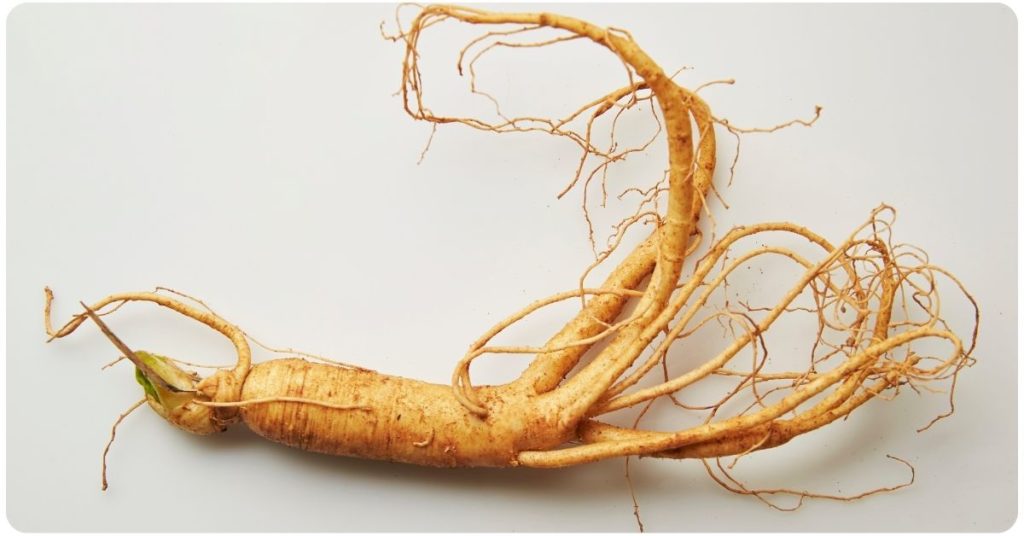
Table of Contents
Health Benefits of American Ginseng:
Due to the variety of benefits of American ginseng, it’s one of the most widely used herbs in the world.
We’ll dig into its various benefits below:
1. May Improve Cognitive Function
American ginseng may be one of the best herbs for brain function.
A human clinical trial found that participants who took American ginseng extract showed improved working memory, reaction time, and “calmness“.
Animal studies show that ginseng extract helped to improve learning and memory function in mice with Alzheimer-like syndrome.
Another animal study found that American ginseng was superior to the benzodiazepine diazepam in reducing anxiety.
Summary:
Both human and animal studies show evidence of American ginseng being helpful for improving brain health, specifically in regard to memory and learning.
2. May Improve Heart Health
American ginseng may be a beneficial herb for cardiovascular health.
An animal study showed that American ginseng helped to reduce the force at which the heart had to work, while at the same time maintaining the same blood pressure.
Another study observed that a single dose of ginseng extract depressed the cardiac contractile function in rats, resulting in a reduced heart rate maintained for the following 24 hours.
Summary:
Animal trials indicate that American ginseng may be useful in promoting heart health. Additional human clinical studies are needed to cofirm these findings.
3. May Improve Blood Sugar
American ginseng may be an effective herb for reducing blood sugar and increasing glucose uptake.
A human clinical trial showed that American ginseng taken with a meal helped to reduce blood sugar spikes by ~20% in both diabetic and non-diabetic individuals.
An in vitro (i.e. “test tube”) study found that American ginseng increased glucose uptake and insulin sensitivity, which in turn may reduce blood sugar levels.
An animal study found that ginseng consumption worked to reduce oxidative stress in mice. This antioxidant effect is thought to be one of the mechanisms by which ginseng works to support healthy blood sugar levels.
This was further proved by in vitro research that showed that American ginseng berry extract has antioxidant properties.
Summary:
According to research, American ginseng may increase glucose uptake and reduce oxidative stress, which both promote healthy blood sugar levels. More human research is needed for confirmation.
4. Anti-Aging Properties
American ginseng may have properties that promote healthy aging.
No controlled clinical trials have been done on the effect of ginseng on life expectancy.
That said, many studies show that ginseng might have an effect on both the chronological and biological aspects of aging, due to its antioxidant properties.
Summary:
American ginseng may be beneficial in supporting aspects of aging. Additional research is needed to verify this finding.
5. Antimicrobial Properties
American ginseng is indicative of having antimicrobial effects.
Research shows that many of the different phytochemical compounds found in American ginseng have antimicrobial properties.
One study, in particular, showed that ginsenosides (a compound found in ginseng) possessed anti-staphylococcal activity. This study also noted that the leaves, roots, and hairy root cultures found in American ginseng are all a source of antimicrobial compounds.
Summary:
Studies show that the compounds found in American ginseng may promote this herb’s antimicrobial properties. Further human trials are needed for confirmation.